Do Ask, Do Tell: A Past, Present, and Future of Queer Military Life
Welcome
This digital exhibit seeks to amplify the voices of Queer veterans and service members that have long been silenced by Don’t Ask, Don’t Tell (DADT). By centering the oral history of Tina Garnanez, a lesbian Iraq veteran, this exhibit brings closer to home the unique and insightful experience of Queer service members during DADT, while also highlighting the breadth and depth of the policy’s harmful consequences. This exhibit aims to go beyond just the “numbers”, which we are all too desensitized to, focusing on humanizing Queer service members, spotlighting real stories, and empowering marginalized people and their histories.
The central question that guides this exhibit is: what was the experience of Queer service members in the US military during DADT? Below, you should be able to explore Queer military history - a story that is often ignored - and hopefully have more of an answer to this question.
Language Disclaimer
It is important to acknowledge the language used in this exhibit. While homosexual is the term most used in the legal and military jargon of the DADT era, this is not fully inclusive of all those affected. Many others whose identities fall under the Queer umbrella were also impacted by this policy, and it is important to not erase their experiences.
Similarly, you will see the acronym LGB often in this exhibit, referencing lesbian, gay, and bisexual service members. This is not to exclude transgender troops, but to draw attention to their own distinct and complex history, which cannot be fully encapsulated here. DADT was specifically in reference to sexuality. To find out more about transgender individuals in the US military, please see the ACLU’s webpage.
A Timeline
As Clinton stated, this policy, in trying to please everyone, most likely pleased no one. Why do you think this decision was made? What is the reasoning for the ban? Arguments for DADT claim that the presence of openly queer service-members would affect troop morale and camaraderie, and thus, would be less effective on the battlefield. While there is no evidence of this, why do you think this justification persisted?
An Individual's Experience
Now that you have seen the large scale and long-lasting impacts of DADT, please explore the smaller-scale: the journey of one gay individual's life in the military during DADT. The storymap below is based on an interview with Tina Garnanez, a gay, Native American, anti-war veteran. While hers is just one, unique, story, it represents the thousands of people who were impacted by DADT.
Hope For the Future
As DADT has been repealed, more and more queer service-members are taking higher positions and are being represented in the military. Young, queer cadets, like Sara Isaacson once was, are now starting to see themselves represented, empowering them to continue in their military journey, and encouraging increased camaraderie and community. We might wonder why queer people decide to join the military, when they know how they have been treated in the past. Perhaps the better question to ask is how do we change this discriminatory and harmful system, to be more welcoming and just - as a paragon of American democracy? Change can come from the inside, and with the repeal of DADT, there is hope for a more democratic US military, in the way that it treats its courageous and thankless members.
What do you think the future of Queer people in the US military will be?
Some Stats and Figures
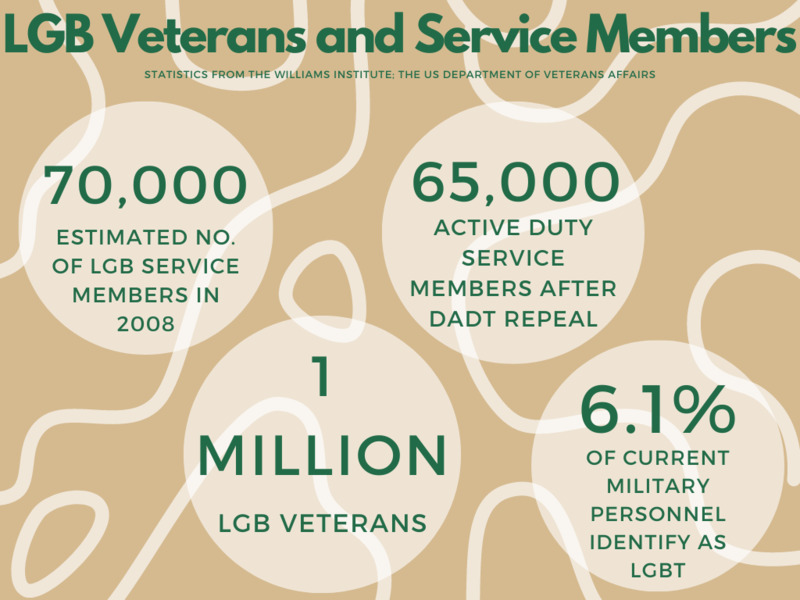
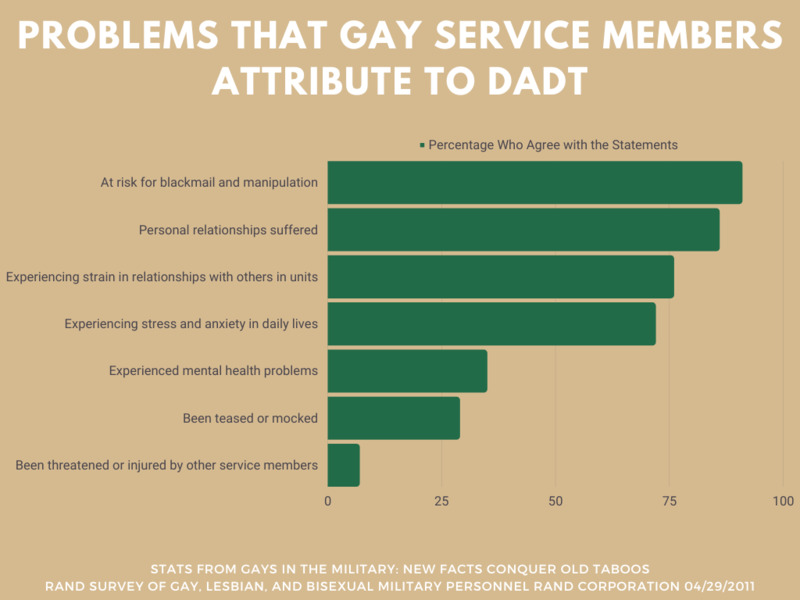
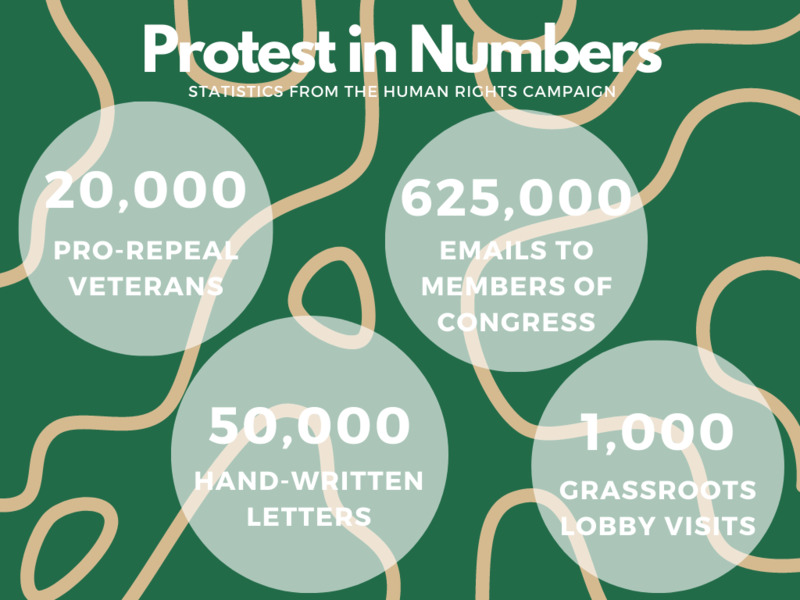
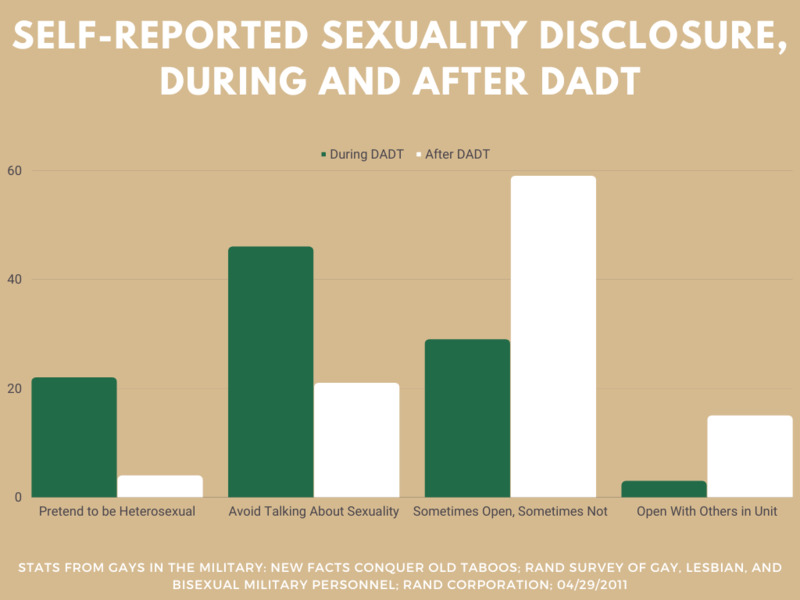
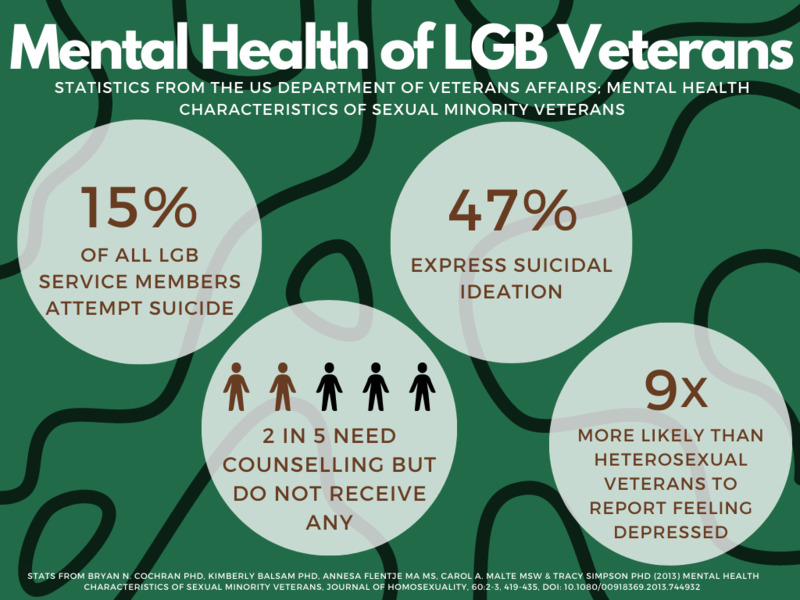
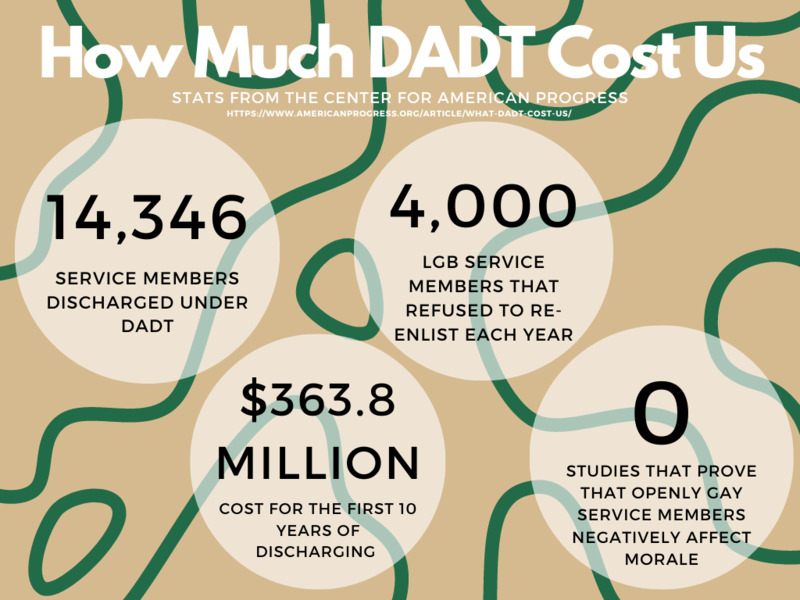
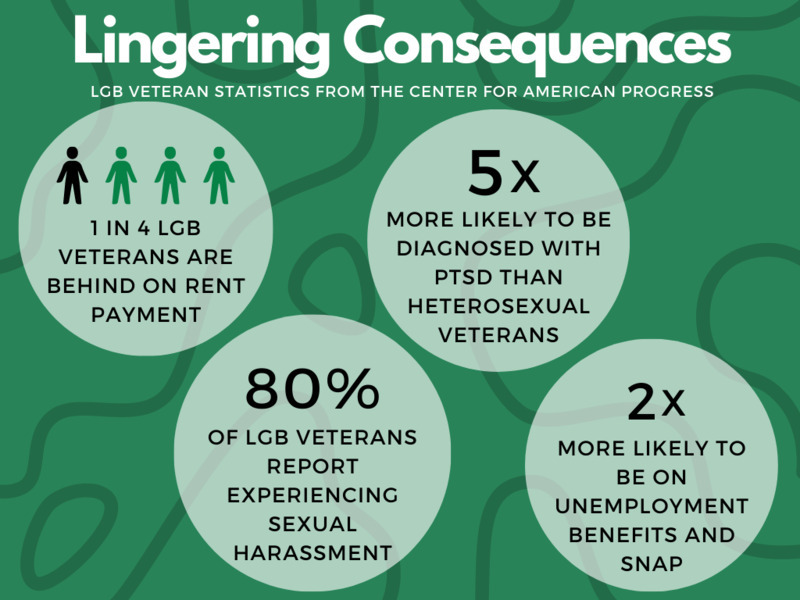
Click through these slides to see some important data about DADT, how many people it affected, and how. While focusing on the numbers tends to dehumanize those who suffer from policies such as this, understanding the large scale impact is necessary to grasp the toll that DADT had, not just on queer individuals, but the US as a whole.
Resources
Axelrod, Jim et al. “Military Veterans Kicked Out for Being Gay Still Fighting for Honorable Discharges.” CBS News, 16 February 2023, https://www.cbsnews.com/news/military-veterans-dont-ask-dont-tell-honorable-discharges/. Accessed 25 April 2023.
Burns, Crosby. “What DADT Cost Us.” Center for American Progress, 20 September 2011, https://www.americanprogress.org/article/what-dadt-cost-us/. Accessed 27 April 2023.
“Don’t Ask, Don’t Tell Repeal Act of 2010.” National Archives Foundation, https://www.archivesfoundation.org/documents/dont-ask-dont-tell-repeal-act-2010/. Accessed 1 March 2023.
Foreman, Adam. “Coming Out Under Fire: The Story of Gay and Lesbian Service Members.” The National WWII Museum, New Orleans, 25 June 2020, https://www.nationalww2museum.org/war/articles/gay-and-lesbian-service-members. Accessed 1 March 2023.
Garnanez, Florentina (Tina) Daisy. “R.28. Special Research Projects: Military Dissenters: Veterans, Military Families, and the Iraq and Afghan Wars.” By Betsy Brinson in Albuquerque, New Mexico, 4 November 2005. Southern Oral History Program Interview Database, https://dc.lib.unc.edu/cdm/compoundobject/collection/sohp/id/16295/rec/9. Accessed 20 January 2023.
Gates, Gary J. “Lesbian, Gay, and Bisexual Men and Women in the US Military: Updated Estimates.” The Williams Institute, May 2010, https://escholarship.org/content/qt0gn4t6t3/qt0gn4t6t3_noSplash_2171bbe6a2087ebdafa822d7e5d55485.pdf?t=lnrk1q. Accessed 1 March 2023.
Isaacson, Sara. “UNC Story Archive recording with Sara Isaacson: The Story of Us.” By Hooper Schultz in Chapel Hill, North Carolina 10 November 2021. UNC Story Archive (70096), University Archives Digital Files in UNC Digital Collections Repository, https://dcr.lib.unc.edu/record/6e35f9b5-c271-4b3a-bb5d-eca32aa70e32/?browse_type=list-display. Accessed 1 February 2023.
“LGBTQIA+ Community in Military Records at the National Archives.” National Archives, 25 October 2022, https://www.archives.gov/research/lgbt/military. Accessed 1 March 2023.
Mahowald, Lindsay. “LGBTQ+ Military Members and Veterans Face Economic, Housing, and Health Insecurities.” Center for American Progress, 28 April 2022, https://www.americanprogress.org/article/lgbtq-military-members-and-veterans-face-economic-housing-and-health-insecurities/. Accessed 27 April 2023.
National Archives Catalog: Don’t Ask, Don’t Tell, https://catalog.archives.gov/search?q=%22Don%27t%20Ask,%20Don%27t%20Tell%22&limit=100. Accessed 1 March 2023.
“Repeal of Don’t Ask, Don’t Tell.” Human Rights Campaign, https://www.hrc.org/our-work/stories/repeal-of-dont-ask-dont-tell. Accessed 1 March 2023.
Rostker, Bernard D., et el. “Gays in the Military: New Facts Conquer Old Taboos.” RAND Review, 29 April 2011, https://www.rand.org/blog/rand-review/2011/04/gays-in-the-military-new-facts-conquer-old-taboos.html. Accessed 25 April 2023.
Slack, Megan. “From the Archives: The End of Don’t Ask, Don’t Tell.” The White House Archives, President Barack Obama, 20 September 2012, https://obamawhitehouse.archives.gov/blog/2012/09/20/archives-end-dont-ask-dont-tell#:~:text=Summary%3A,in%20our%20nation's%20armed%20forces. Accessed 25 April 2023.
Thompson, Mark. “Gays in the U.S. Military Are Now Protected Against ‘Witch Hunts.’” Time, 9 June 2015, https://time.com/3915121/gays-military-discrimination/. Accessed 27 April 2023.
“Transgender People and the Military.” American Civil Liberties Union, 2023, https://www.aclu.org/issues/lgbtq-rights/transgender-rights/transgender-people-and-military. Accessed 4 May 2023.
“Veterans with Lesbian, Gay, Bisexual and Queer Identities.” US Department of Veterans Affairs, https://www.mentalhealth.va.gov/communityproviders/veterans-lgb.asp. Accessed 25 April 2023.